
Choose the kitchen plan around how you cook.
A kitchen floor plan should explain what happens in the room: preparing, cooking, clearing, gathering and moving through. The familiar layout names are useful starting points. The real test is whether the arrangement works with the people, appliances and surrounding rooms in your home.
In this conversation
- Open to the house, with a clear working area.
- A galley that supports movement.
- An L-shape with a considered corner.
- A U-shape with room to work inside it.
- An island with an assigned role.
- Develop the plan in three dimensions.
- Compare the routines, not just the shapes.
Open to the house, with a clear working area.
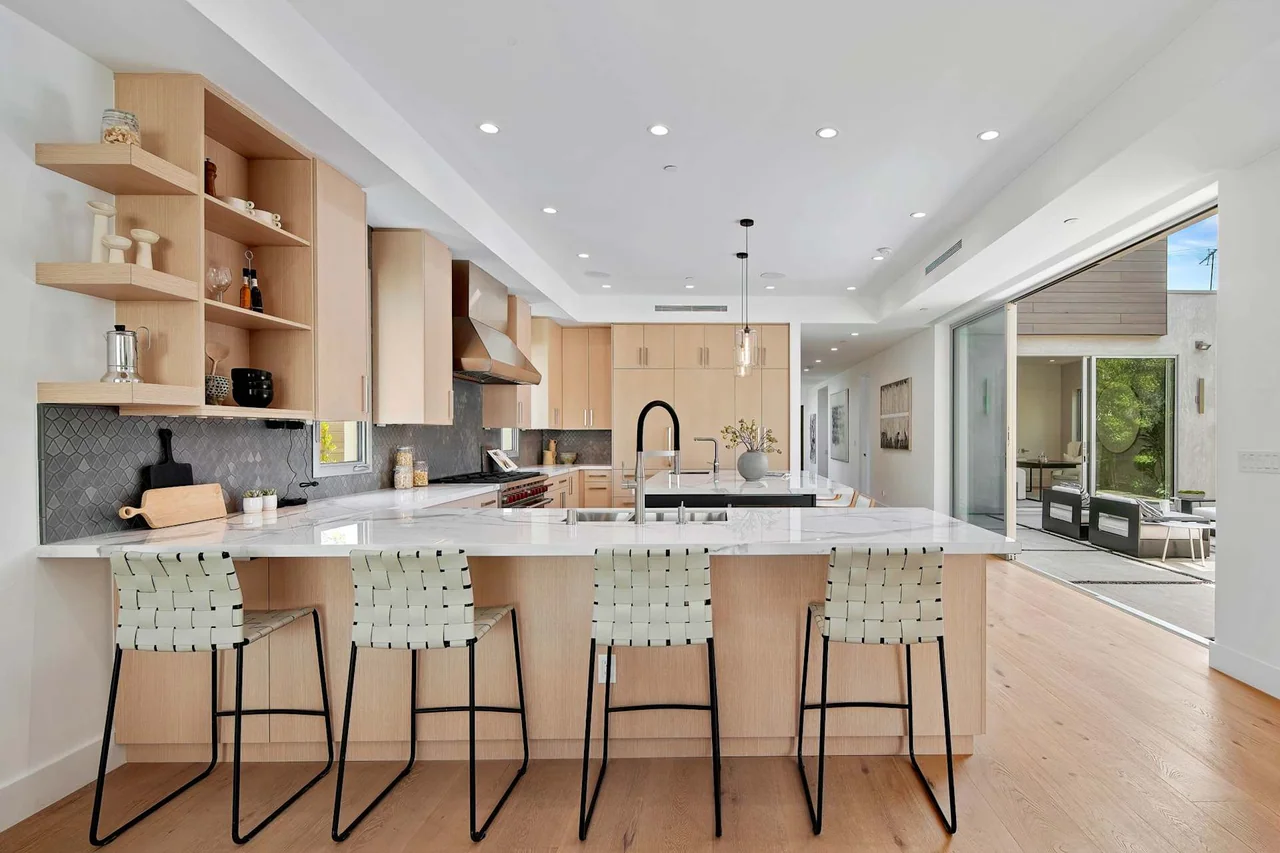
An open kitchen connects cooking to adjoining living and dining space. That can suit an owner who wants to remain part of the conversation while preparing a meal. It also means that the kitchen’s lighting, storage and material decisions are visible from more of the home.
Ask the designer to test where guests pause and where the cook needs uninterrupted access. Review the view of preparation and cleanup from the living area. The construction team should coordinate any proposed opening with the architectural and engineering information; an open appearance does not explain the work required to achieve it.
A galley that supports movement.
Two parallel runs can give a kitchen a direct, legible arrangement. Position the actual appliances, storage and preparation surfaces on the plan rather than evaluating the room only as two rectangles. A fridge or dishwasher opening into a route changes how the space is used.
Consider whether the galley is a destination or a passage between other rooms. A through route may need a different response from a kitchen used only by the people cooking. Ask the design team to resolve that movement and to check the intended dimensions against the selected products and relevant requirements.
An L-shape with a considered corner.
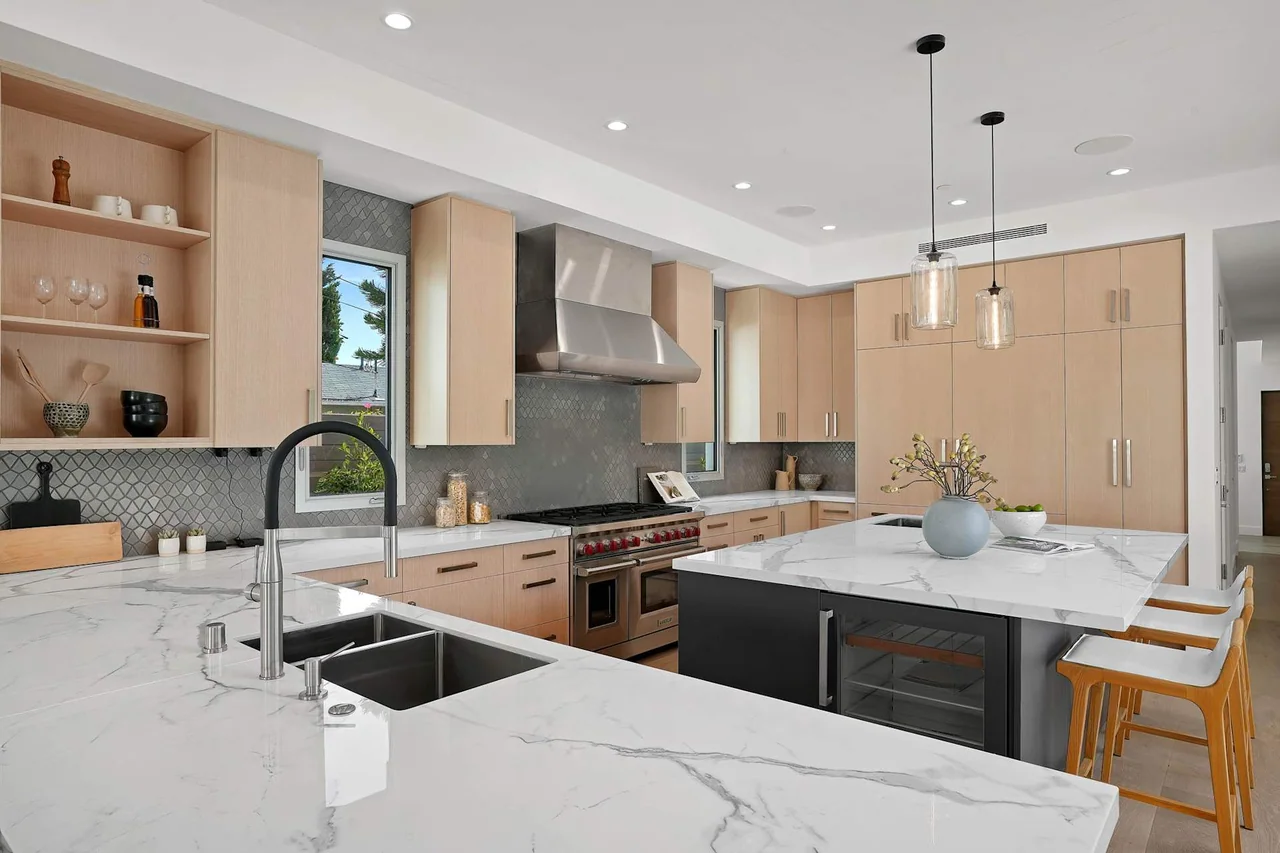
An L-shaped kitchen places the working runs along adjoining sides, leaving another part of the room available for circulation or another use. That open area can be valuable without automatically needing an island. Test a dining arrangement, a clear route or additional workspace against the way you use the house.
The corner deserves particular attention. Cabinet access, drawer fronts, worktop joints and the meeting of finishes can become awkward if they are left to separate decisions. Coordinate those details with the interior designer, cabinetmaker and fabricator before the appearance is fixed in a rendering.
A U-shape with room to work inside it.
Three connected working sides can place storage and surfaces around the cook. The plan still needs to account for doors, appliance openings and the way more than one person uses the kitchen. More cabinetry is useful only when it remains accessible and serves a specific purpose.
Look closely at both corners and the opening into the room. Ask where food arrives, where dishes leave and whether someone entering interrupts an active task. The right arrangement balances those movements with the room’s proportions; the shape alone does not establish efficiency.
An island with an assigned role.
An island is a component that can sit within several layouts. Decide whether its main purpose is preparation, cooking, cleanup, seating or storage. Trying to give it every function can create conflicts between guests, appliances and the working area.
Review the installation as well as the plan. Stone joints and support, cabinetry, electrical requirements and any plumbing must be coordinated with the selected design. Check how a large fabricated piece will reach the room. A strong focal point should be supported by clear decisions about the work beneath and around it.
Develop the plan in three dimensions.
A floor plan cannot show every conflict. Review elevations and relevant sections to coordinate tall storage, appliance panels, lighting and the extraction route. Confirm the appliance specifications before treating cabinet openings as final. A discreet hood or integrated fridge still needs its installation requirements to be resolved.
The architect and interior designer establish the agreed design direction. The builder coordinates the trades and installation questions within the construction scope. Keeping those conversations together is especially valuable when the kitchen shares ceiling details, stone or millwork with adjacent rooms in a major renovation.
Compare the routines, not just the shapes.
Use the same daily routines to assess each option: unloading groceries, preparing a meal, clearing dishes and moving to the table or garden. Review the drawings with your design team, using the intended appliances and furniture. Note where a person or open door interrupts another activity.
Bring the preferred option into the wider home plan before committing to fabrication. Energize Builders approaches kitchens as part of coordinated custom homes and major renovations, where the room’s details and adjoining work can be considered together.
Questions for the first meeting
- Preparation, cooking and cleanup positions
- Guest movement and household through routes
- Appliance and cabinet opening conflicts
- Storage access and worktop junctions
- Coordination with the adjoining rooms
Further information
Review the references below with your project team. Confirm local requirements with the responsible authority and product-specific requirements with the manufacturer.
Planning a custom home or major renovation with an architect or interior designer?
Continue the conversation.
Kitchens & bathrooms · 4 min read
Let the room’s proportions set the layout.
Kitchens & bathrooms · 3 min read